Axis 1
1) The 5-HT7 Serotonin Receptor: A Promising Therapeutic Target
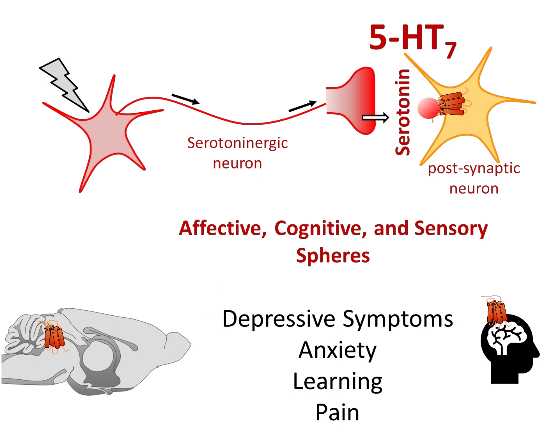
Membrane receptors, located at the interface between the extracellular and intracellular environments, play a central role in cellular communication processes.
The 5-HT7 serotonin receptor belongs to the superfamily of G protein–coupled receptors (GPCRs). It is currently considered a highly promising therapeutic target for the treatment of various neurological, psychiatric, and tumor-related disorders.
2) Molecular Screening: Exploring the Pharmacological Spectrum
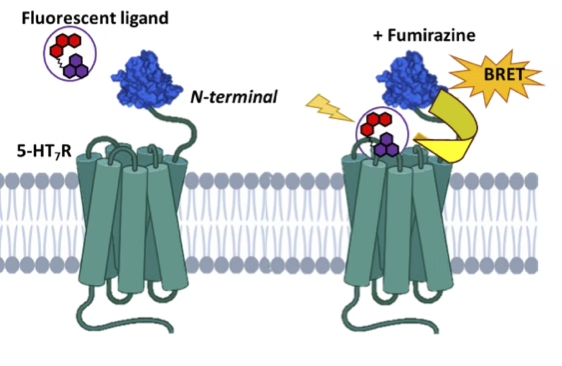
Our objective is to identify novel ligands capable of:
- preferentially activating specific signaling pathways (biased ligands),
- or acting as allosteric modulators that regulate the activity of the endogenous ligand, serotonin.
To identify and characterize these new molecular entities (small molecules and nanobodies), we have developed screening strategies based on biophysical approaches (BRET, nanoBRET) and biochemical methods (phage display, ELISA).
3) Molecular Pharmacology and Spatiotemporal Signaling
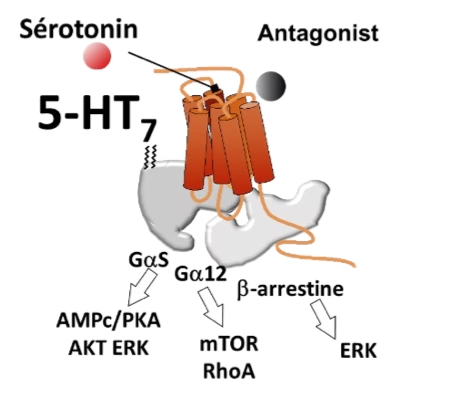
We aim to decipher the molecular mechanisms involved in the effects of the new ligand, and identify the signaling pathways engaged.
To achieve this, we develop cellular assays incorporating biophysical approaches (BRET, complementation systems) to monitor intracellular protein trafficking in real time and to comprehensively analyze receptor signaling networks.
4) From Preclinical Research to Translational Applications
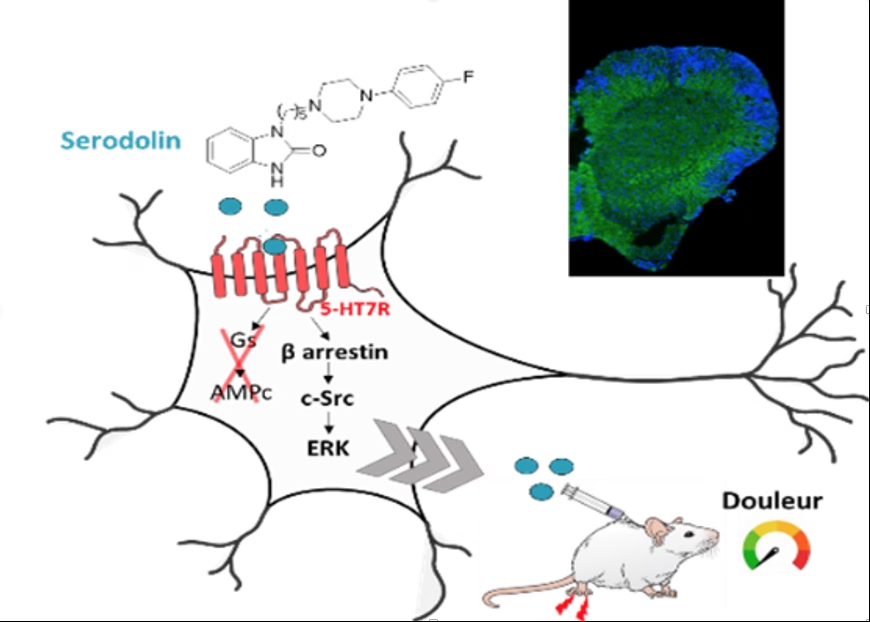
We investigate receptor dysfunction in neurological and psychiatric disorders, as well as the therapeutic potential of newly identified ligands, whether chemically synthesized or derived from biotechnological approaches (e.g. nanobodies).
We also evaluate their potential for the treatment of nociceptive and neuropathic pain using various preclinical models. Moreover, we aim to characterize target cell populations and understand the neuronal circuits involved.
In collaboration with the Neurology Department at the University Hospital, we study receptor expression in patients’ immune cells and explore its potential role as a biomarker of neuroinflammatory diseases.